
Trump's Ever Evolving Efforts to Smite Enemies (via Bill Pulte) and Reward Friends (via Slush Fund)
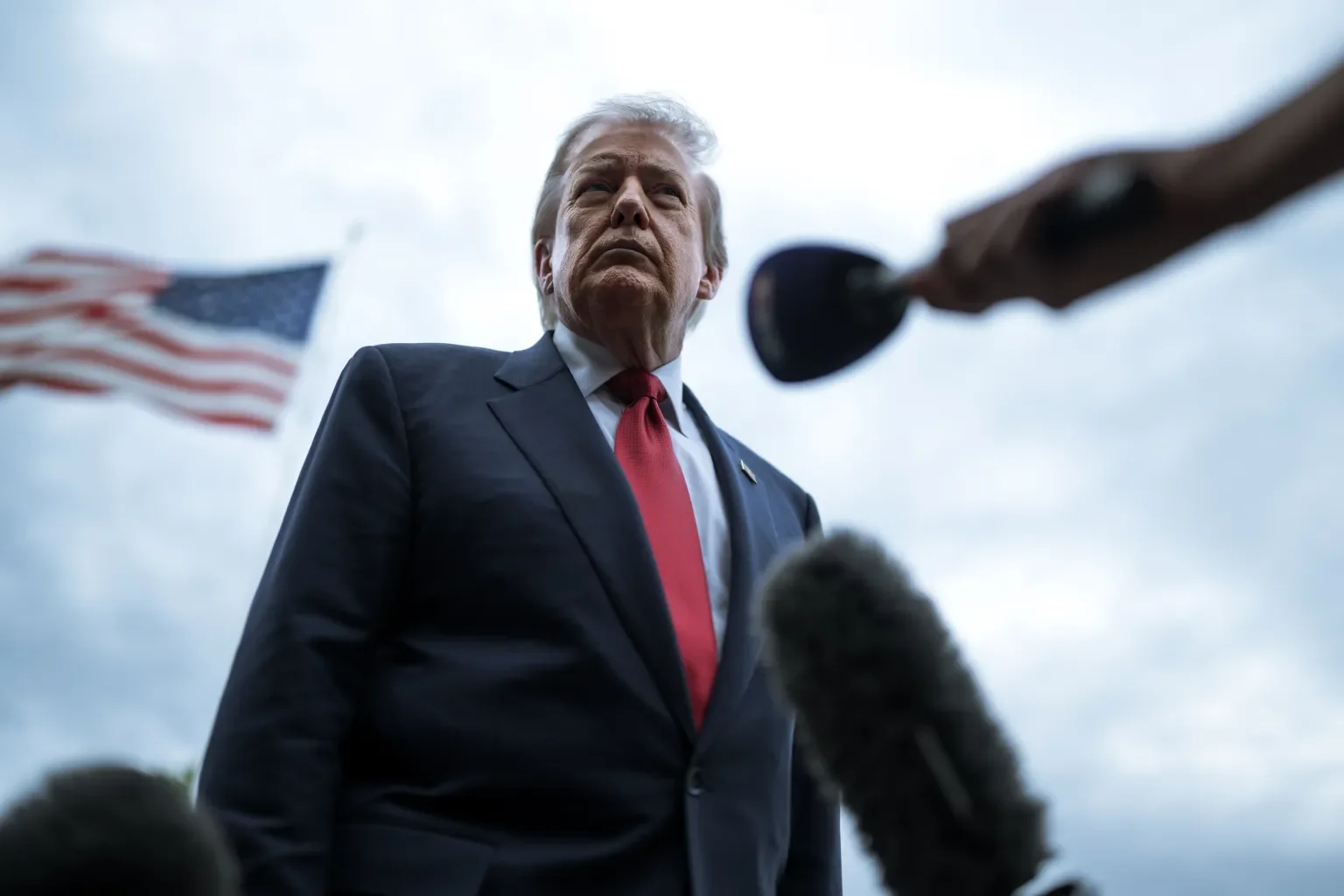
President Donald Trump speaking to the media. PHOTO: White House.gov
As President Donald Trump nominated his stunningly unqualified Cabinet choices, critics predicted the nation was headed for serious trouble. The nominees’ chief attribute appeared to be devout loyalty to Trump rather than any professional credentials or even related experience. The resulting Senate confirmation hearings presented an early taste of just how low senators were willing go in kowtowing to the man in the Oval Office.
They ultimately confirmed a rogues’ gallery of Cabinet secretaries: From conspiracy-focused anti-vaxer Robert F. Kennedy Jr at Health and Human Services to the second-string Fox News anchor Pete Hegseth, whose boxcar of baggage included significant drinking problems and well-documented misogyny, at Defense. The new attorney general, Pam Bondi, one of Trump’s defense lawyers during his first impeachment trial, had regularly provided helpful services to the Mar-a-Lago owner when she served as Florida’s attorney general.
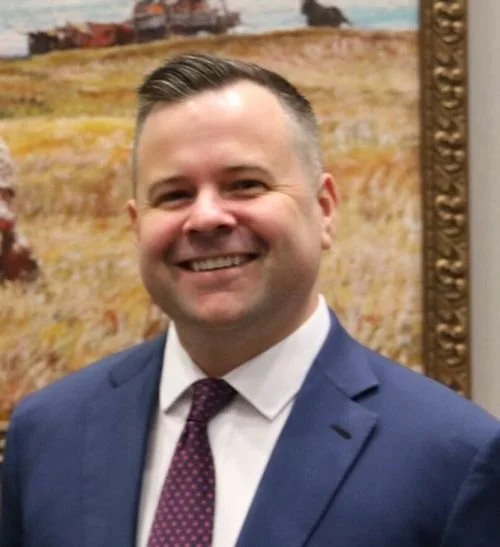
Bill Pulte, former Federal Housing Finance Agency Director, is now Acting Director of National Intelligence. PHOTO: Wikimedia Commons
So it was big surprise when one of the most toxic trouble-makers in Trump’s second administration held the anodyne title of Federal Housing Finance Agency director.
Bill Pulte, a real-estate nepo baby appointed head of Fannie Mae and Freddie Mac, managed to weaponize obscure mortgage paperwork, often decades old, in pursuit of Trump’s enemies. Pulte seems to have spent most of his time at the job examining their mortgage documents — rifling through ancillary paperwork, often for second homes or housing secured for relatives.
Public officials Trump had long targeted for revenge — including New York State Atty. Gen. Letitia James, who convicted Trump on fraud charges, and Sen. Adam Schiff (D-Calif.), who played a key role in the Trump’s two impeachment trials — suddenly found themselves confronting charges of mortgage fraud.
Though none of these unproven allegations led to a conviction, Trump looks to be pleased as punch with this unexpected avenue of vengeance against those he asserted had persecuted him. After all, just defending against these sorts of charges eats up a great deal of time and money. Trump himself built a reputation as the maestro of the nuisance suit, entangling unpaid contractors or rivals in endless, niggling legal bouts.
Now, Trump has rewarded Pulte by naming him Director of National Intelligence. Sitting atop all America’s 18 spy organizations, including the Central Intelligence Agency and the National Security Agency, Acting-Director Pulte has endless reams of data and documents to rifle through.
As Puck’s Julia Ioffe reports in her discerning piece, “Trump’s New Rules for Radicals,” Pulte will now also have exponentially greater power to hound and punish Trump’s enemies.
Consider, the State Department spent last week striving, Ioffee perceptively lays out, to convince diplomats that “antifa is the new Al Qaeda.”
The White House is seeking to shift the nation’s anti-terrorism focus away from the networks of domestic right-wing paramilitary groups and white nationalist extremists to what the administration asserts is the far greater danger coming from the left. The fact that there is no actual “antifa” organization, that it has no official leadership or membership rolls, has not deterred the president.
The State Dept. leadership organized a large symposium at the newly renamed Donald J. Trump U.S. Institute of Peace about the “Rise of Far-Left Political Terrorism” as a “clear and present danger.” Ioffe sees this as a key component of an administration plan to greatly expand the reach and power of the National Intelligence Director:
The Institute of Peace event was part of a broader effort by the Trump administration to reorient the counterterrorism machinery of the U.S. government … toward fighting left-wing extremists … — a threat, they believe, … ignored by previous presidents. It’s all nonsense, said a former Biden senior counterterrorism official: “We acknowledged violent far-left organizations, but the reality is they are minuscule compared to the far right.”
But elements within the Trump administration see something more sinister. “There are people in the C.T. structure who genuinely believe there’s this giant conspiracy funded by Soros and that no one’s been paying attention for ideological reasons because it’s the deep state,” said one recently retired counterterrorism official.
…[T]he administration … added antifa as a top counterterrorism concern to the National Intelligence Priorities Framework, a classified document that tells the nation’s 18 intelligence agencies where to direct their focus. But critics fear the move is less about national security than weaponizing the intelligence community against Trump’s ideological opponents. …[T]he State Department has designated several small and obscure left-wing groups as foreign terrorist organizations and instructed U.S. embassies to gather information on any connections they might have to U.S. citizens back home. Americans enjoy constitutional protections for freedom of speech and association, but providing material support to a foreign terrorist organization is, in fact, a crime. And many counterterrorism and civil liberties experts worry this is the Trump administration’s one neat trick to sidestep those legal protections, and to target American citizens it disagrees with. …
That this entire argument is based on a complete chimera — a manufactured fantasy about left-wing terrorists that has no basis in fact — does not appear to be slowing down the administration.
Meanwhile, the actual network of battle-hardened right-wing terrorists gets some breathing room to regroup.
This includes of sizeable portion of the Jan. 6 insurrectionists who attacked the U.S. Capitol to disrupt the session and hunt down public officials before they could certify the 2020 presidential election results.
These are the very people Trump seems so intent on rewarding with gobs of money from his proposed $1,776-billion slush fund. As we have now heard in several recent interviews, Trump is still holding firm to this shady scheme — amid mounting public outrage and even resistance from some Republican officials. Though, as the midterm elections approach, we’ll just how many actually stand up to him.
The Bulwark’s Jonathan V. Last, with his usual gimlet eye, astutely explains why Trump can’t quit this idea. Last lays out why this slush fund remains vital to Trump in his recent post “Trump’s Slush Fund Is a Multitool. And we’ve all been missing its most important functions.”:
[Trump] should encourage anyone and everyone to apply for compensation. And then he should wait. Because open applications give him leverage over people. … If Trump starts paying people right away, the fund gets drawn down and people start to realize that maybe they won’t get anything from it.
But if the nut is largely intact, everyone in MAGA world can dream. Trump can pass out tens of billions of dollars worth of promises — Don’t worry, we’ll take care of you; you just have to wait a little bit longer — with everyone thinking that, since he’s going to pay up at the very end, there’s enough cash for them to get theirs.
Second-term presidents become politically weak when members of their party realize that their incentives are diverging from the POTUS. Maybe the POTUS is becoming unpopular, so candidates need to distance themselves from him. Maybe party elites are thinking about the future and how to take over once the old man is gone.
The slush fund is a tool to fix that problem. It’s the promise of a tangible reward for Republicans to stay on his side. Be nice to him. Do what he asks. … And maybe there’s a pot of gold for you at the end of the rainbow.
Trump is always about power and leverage. It is the dynamic he knows and understands best. This is one key reason why that $1,776-billion fund is so hard for him to give up on.
So, expect it to keep coming back!
Why Unions Matter
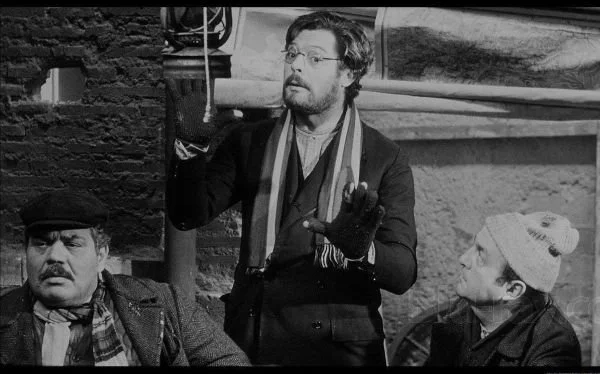
Folco Lulli (L), Marcello Mastroianni (center) and Bernard Blier (R) in ‘The Organizer.’ Mastroianni plays the title character — a smart union adviser who helps striking workers in their fight to improve brutal conditions against ruthless factory owners. PHOTO: Paramount Pictures/Lux Film
I’ve been watching an amazing and too-little-known 1963 Marcello Mastroianni movie called “The Organizer.” Mastroianni pays the title character, a poor, mild-mannered high-school professor traveling across late 19th century Italy to help rally Turin’s factory workers, who are striking against harsh 14-hour workdays and dangerous conditions. It’s a vital reminder how crucial unions were in the battle against the then-standard brutal work conditions and how hard-fought even the most minor improvement was.
It is terrific!
Mastroianni is brilliant — playing deftly against type. The screenplay was rightly nominated for an Oscar and the black-and-white photography is beyond gorgeous.
It’s streaming on Criterion right now. You can rent it, though, from the New York Public Library. Maybe your local library can get it for you as well.
It’s definitely worth the effort!